
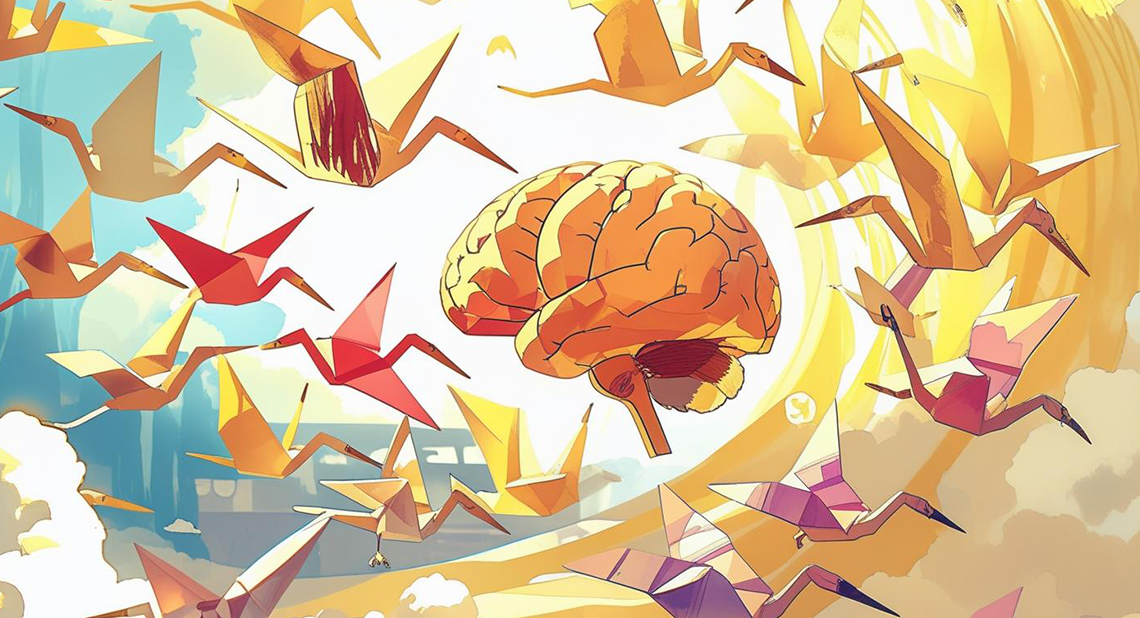
Unlike traditional learning methods, Storigami is based on the philosophy of brain-based learning, which centers on the brain’s natural operating principles. But why is a simple activity of storytelling and paper folding so beneficial for our brains? This article explains the neuro-pedagogical benefits behind Storigami with scientific data.
Storigami is a holistic experience that simultaneously activates the visual, auditory, and kinesthetic senses. When a child listens to a story (auditory), folds a figure (kinesthetic), and observes the resulting shape (visual), different parts of the brain are activated concurrently. This multi-sensory activation enhances inter-neural communication, allowing information to be stored more permanently in spatial memory. Unlike rote memorization methods, Storigami deepens the learning process by making information experiential and meaningful.
Origami develops right-brain skills such as spatial thinking and perception, while storytelling supports left-brain skills like language comprehension, vocabulary, and logical reasoning. Storigami encourages these two hemispheres to work in a synchronized and harmonious manner, increasing cognitive flexibility. This neural synchronization builds a natural bridge between creativity and logical problem-solving, turning learning into a multi-dimensional experience.
Storigami pairs information with a concrete experience rather than just memorizing it. The folding steps, which correspond to the flow of the story, ensure that the learned information is not just heard, but also handmade, felt, and memorable. This method allows for the concretization of abstract concepts and makes learning permanent.

Yotutube Kanalımızı takip edin!

Based on scientific foundations, Storigami is an innovative platform that combines storytelling and the art of origami to support the holistic development of both children and adults.
Bize yazın!