
In the rush of our daily lives, we often forget the old magic of creating something with our own hands, searching instead for learning through the virtual windows of screens. In today’s world, where rote-based methods fall short in child development, an innovative approach—Storigami—emerges as a groundbreaking solution that blends learning with creativity.
This journey begins with a personal memory of Prof. Dr. Ebru Hasibe Tanju Aslışen. During her middle school years, she was introduced to the delicate “kirigami” works—snowflake-like paper cuttings—crafted from tiny note papers by her grandfather, Retired Air Force Colonel M. Reşat Savga. The contrast between his military spirit, flying planes without compasses during the Turkish War of Independence, and his gentle hands shaping paper for his granddaughter each evening, left an indelible mark on her soul. The pride that shone in his eyes revealed how a simple piece of paper could carry immense joy. Years later, revisiting this memory, Prof. Dr. Aslışen combined her professional expertise with her grandfather’s legacy, defining Storigami as a “miracle.” What began as a personal experience is now enriched with scientific foundations and presented to the educational world through the book “Storigami in Early Childhood Education: The Fellowship of Storytelling and Origami.”
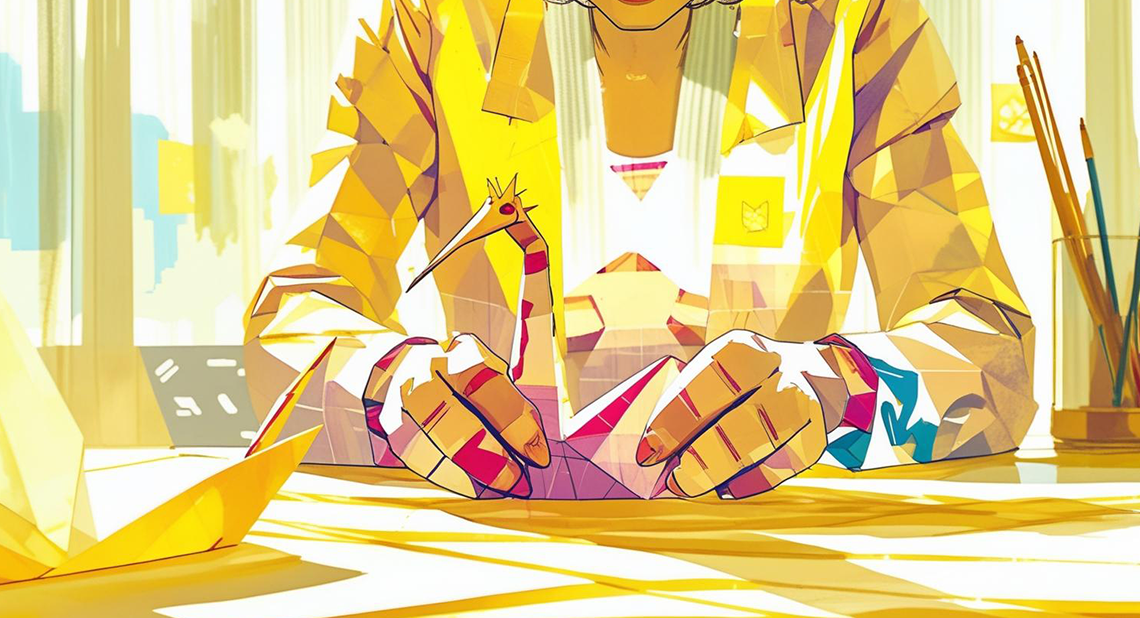
At its core, Storigami is “storytelling with origami.” As a story is read or told, paper folds bring its actions, plot, or characters to life. Passive listening transforms into an active, hands-on, multisensory learning experience. The final surprise figure, revealed at the end, elevates the joy of learning. This process unites the emotional and cognitive power of storytelling with the motor and spatial benefits of folding, engaging both hemispheres of the brain simultaneously and making learning more permanent.
Cognitive Development: Origami helps concretize abstract concepts such as color, size, and shape. Each fold requires problem-solving, and when combined with the cause-and-effect nature of stories, it enhances logical and critical thinking.
Motor Development: Folding and manipulating paper strengthens finger muscles and hand–eye coordination, supporting fine motor skills. The simultaneous use of both hands plays a key role in motor development.
Language Development: Listening carefully to instructions, asking and answering questions, and talking about the figures encourage active language use. Storytelling expands vocabulary and develops the ability to form complex sentences.
Social–Emotional Development: Completing a creation fosters confidence and pride. Group activities encourage teamwork and sharing skills. Through stories, children also practice emotion regulation and empathy.
The book “Storigami in Early Childhood Education: The Fellowship of Storytelling and Origami” carries the playful and transformative spirit of Storigami on every page. Beyond being an academic source, it demonstrates that Storigami is not just a hobby, but a research-based method that supports holistic development. The second edition includes twenty new stories written by the author, step-by-step folding photographs, and QR-coded videos. Readers can witness paper becoming a figure, and stories turning into tangible experiences.
This work speaks not only to children but also to adults who keep their inner child alive. Written for educators, parents, and specialists, it opens new doors for anyone seeking to make a difference in education. Discover this unique method to unlock new adventures, fold stories into your life, and bring joy to the child within you.

Follow our YouTube Channel!


Based on scientific foundations, Storigami is an innovative platform that combines storytelling and the art of origami to support the holistic development of both children and adults.
Bize yazın!